Visiting the San Antonio missions: the complete guide
First: the ticket you do not have to buy
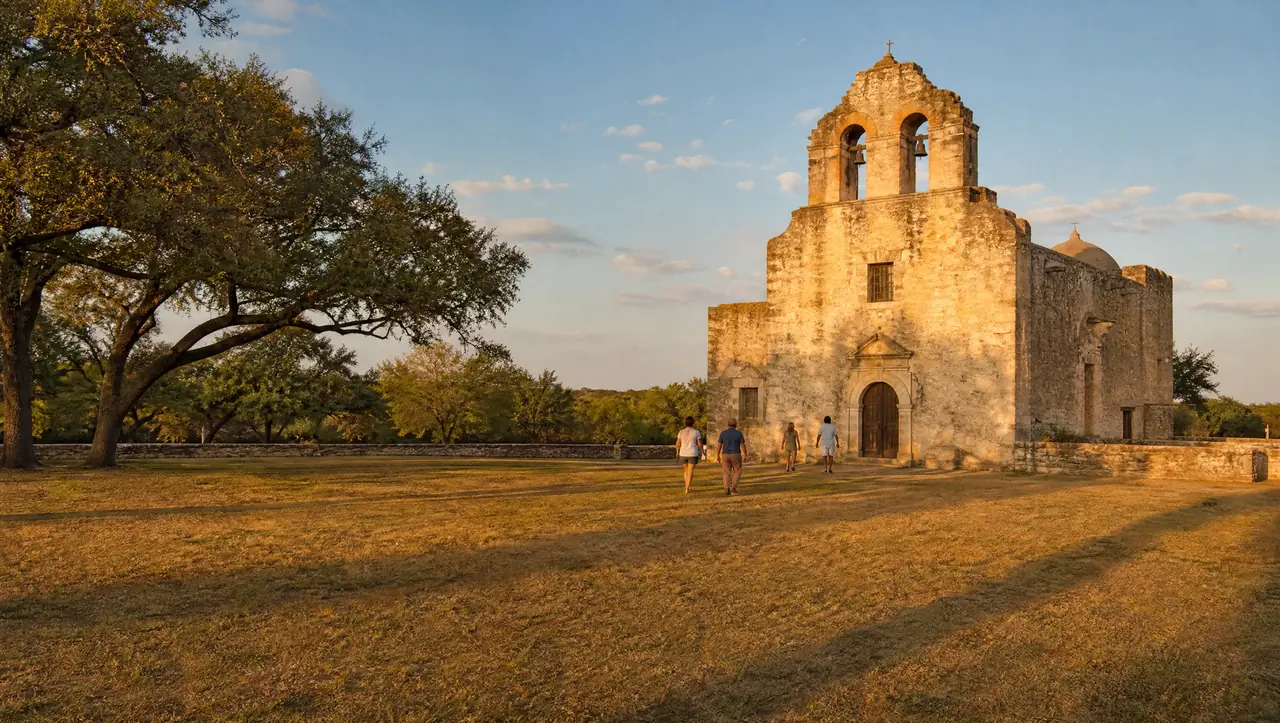
There is no entrance fee at any of the four missions, no per-mission charge and nothing to book. Parking is free at every site. “All guided tours are free,” the park writes, and it lists the cost of the film as “Always Free”. There are water filling stations at all four.
Two things do carry a charge, and naming them is what makes that paragraph believable. Commercial or professional photography needs a permit applied for at least fourteen days ahead, and the park says plainly that “there will be a fee involved”; your own camera needs nothing. Special use permits carry a $50 non-refundable application fee, and none is needed for filming involving eight or fewer people meeting the stated conditions. That is the whole list — do you need tickets has the sourcing, and what a day costs prices four real versions of it.
When to arrive, because the heat writes your timetable
The park opens 9 a.m. to 5 p.m. daily, the grounds run sunrise to sunset, and it closes three days a year: Thanksgiving, Christmas and New Year’s Day. No seasonal variation is published, so the calendar never decides your day. The weather does. July and August average about 95–96°F, and the park records 90°F or above on an average of 116 days a year. Humidity runs about 80% early and 50% by late afternoon, so the early start you want is also the heaviest air of the day.
The park runs its own heat alert, specific enough to quote whole: “Don’t Let Heat be What Ruins Your Trip. Hike or bike before 11am. Wear sunscreen, sunglasses, and a hat. Drink plenty of water. Eat salty snacks. Rest in the shade.” No official source names a best month, so this is our reasoning and not the park’s: March, April, October and November sit between 72 and 82°F, and June to September asks you to be at a mission before eleven or not at all. When to come, and why the park runs two sets of hours.
The four missions, north to south, and what each is for
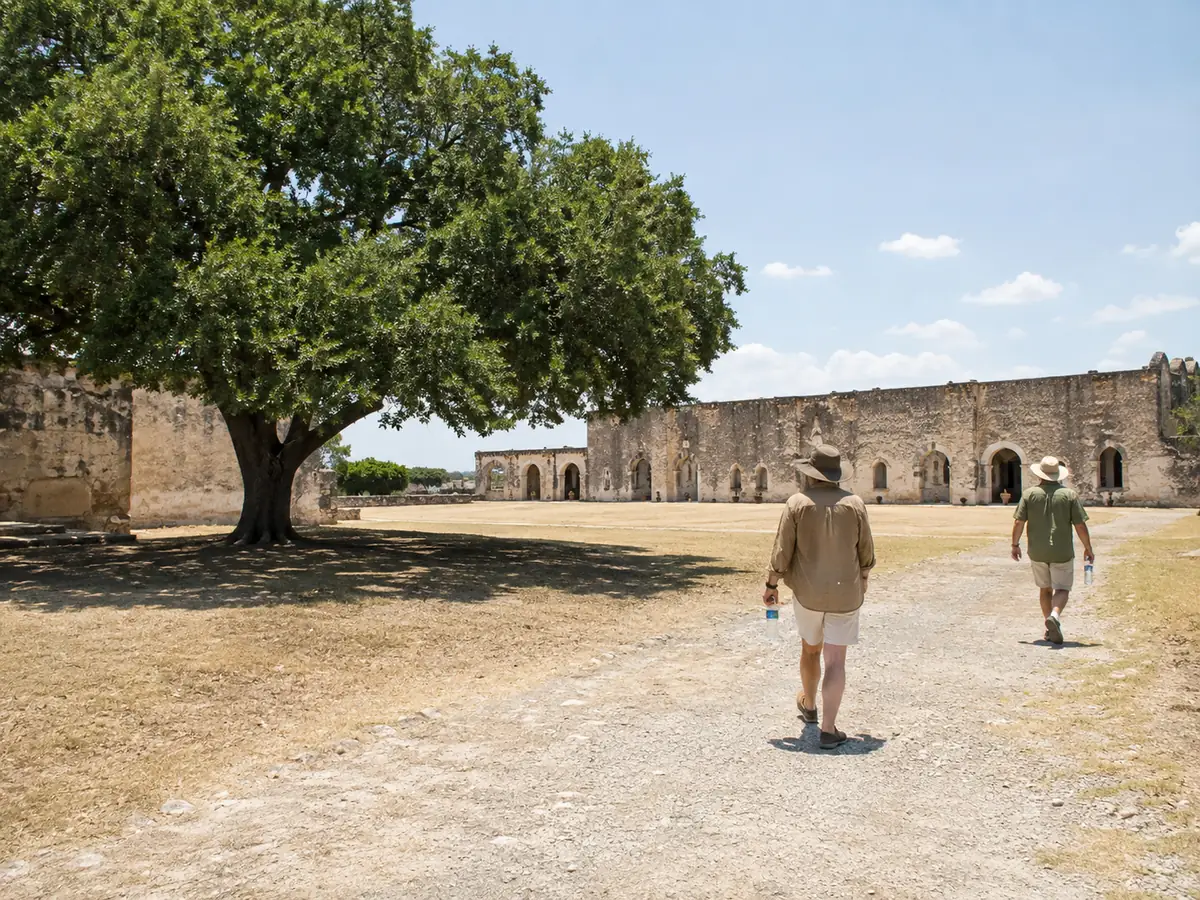
They sit in a line down the river, two to three miles apart: Mission Concepción, Mission San José, Mission San Juan, Mission Espada. The first is about three miles south of downtown. They do not deserve equal time.
Mission Concepción (Nuestra Señora de la Purísima Concepción de Acuña) is the one for what survived. Its stone church took about fifteen years to build and was dedicated in 1755, and the reason it matters is a roof: the park says the integrity of the church and convento roofs prevented the deterioration of many fine examples of frescos. Today “only four rooms clearly show remnants of these colorful designs painted over 250 years ago”. Look at them properly.
Mission San José (Mission San José y San Miguel de Aguayo) is the one to pick if you see only one: the “Queen of the Missions” and the largest of them, its limestone church begun in 1768, its Rose Window described as the premier example of Spanish Colonial ornamentation in the United States and attributed by folklore to Pedro Huizar. Add the granary, the grist mill, the convento arches and the park’s only visitor centre. Which mission is best.
Mission San Juan (Mission San Juan Capistrano, not the California mission of the same name) has a demonstration farm fed by a historic acequia, run with the San Antonio Food Bank, and a paved, ADA-accessible Yanaguana Trail. Mission Espada (Mission San Francisco de la Espada) has a friary from 1745, a church completed in 1756 and the daily 3 p.m. loom demonstration in its museum. These are the quiet two — and the two the bus does not reach. All five missions, in full.
Why three of the four were founded somewhere else
Here is the part that reframes the park. Three of these four did not start here. They were founded in East Texas and moved to this river, two of them on the same day.
| Mission | Founded | Where | Arrived on the river |
|---|---|---|---|
| Mission Espada | 1690 | East Texas, as San Francisco de los Tejas, near present-day Weches | 5 March 1731, renamed |
| Mission Concepción | 1716 | East Texas | 1731, “after a tenuous existence and several moves” |
| Mission San Juan | 1716 | East Texas, as Mission San José de los Nazonis | 5 March 1731, reestablished on the east bank |
| Mission San José | 1720 | Here — Writ of Possession, 23 February 1720 | Never moved |
So “which is oldest” has three defensible answers: Mission Espada by founding, 1690, which the Park Service calls the first mission in Texas outright; the Alamo on this river, 1718; and Mission San José continuously on its own ground, 1720. Which mission is oldest takes all three apart.
The Alamo keeps appearing because it is the fifth mission, Mission San Antonio de Valero, owned by the Texas General Land Office and run by Alamo Trust. It is free but reservations are required — the commonest way a San Antonio day goes wrong, and none of this park’s rules apply to it. It is inside the World Heritage inscription: five missions plus Rancho de las Cabras, six components, of which this park runs four. The 2015 listing.
The churches are working parishes, and that is not a formality
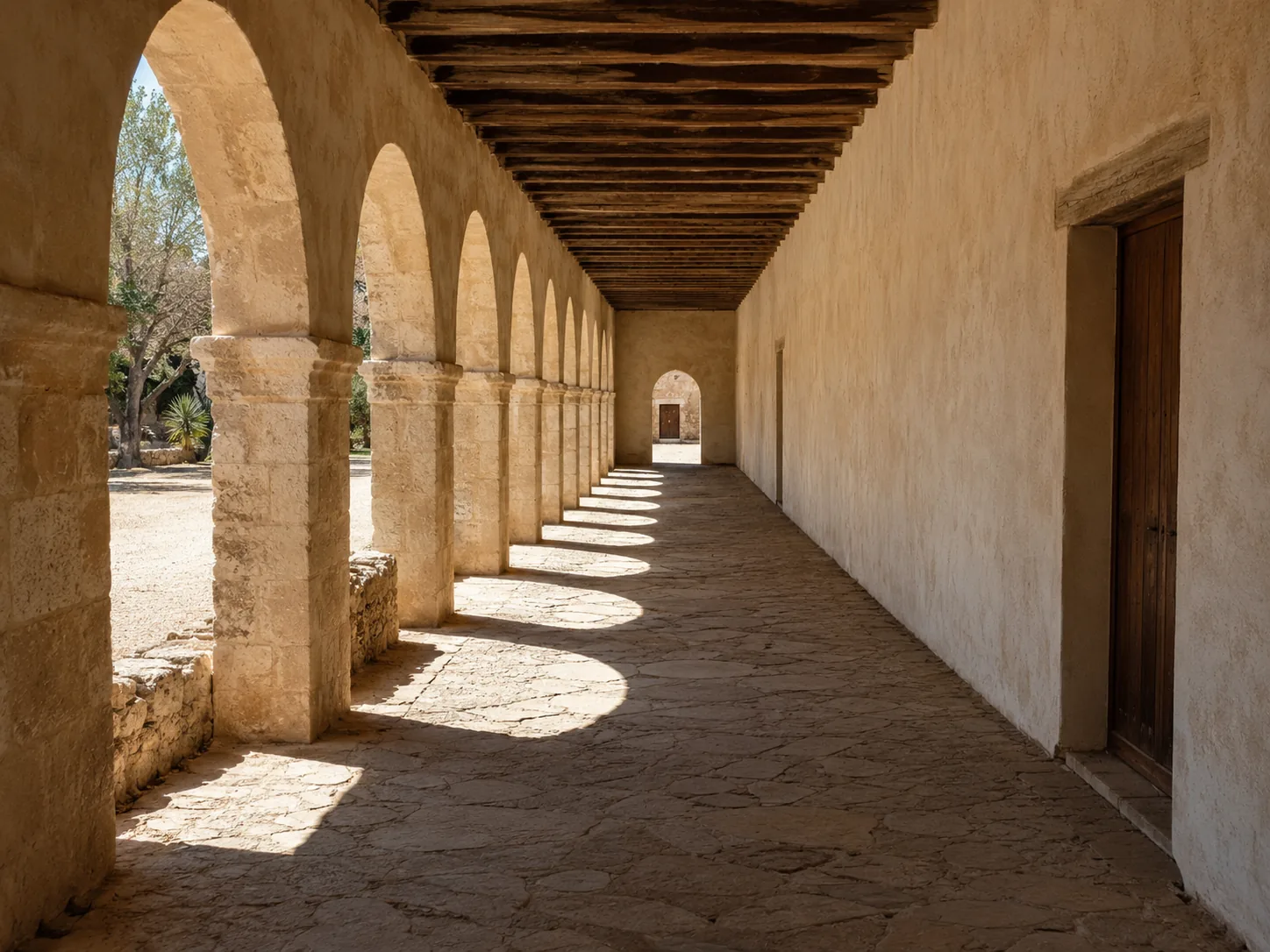
All four churches inside the park boundaries are active Catholic parishes, each holding regular services in English and either Spanish or bilingual, and the Park Service declines to guarantee access to any of them: “Due to these churches being active parishes church hours vary.” The 9–5 park hours cover the facilities and the grounds; they do not promise that any church interior is open. A wedding or a funeral can close one on any day.
Phone the parish — Mission Concepción (210) 533-8955, Mission San José (210) 922-0543, Mission San Juan (210) 534-3161, Mission Espada (210) 627-2064. The one service this site names is Mission San José’s Sunday noon Mariachi Mass, in Spanish; every other time we checked disagreed between two official sources. The only published conduct rules are about the fabric — do not sit, stand or climb on the structures — and no source publishes a dress code, so we will not invent one and attribute it. Mass, and what courtesy actually requires.
Getting between them, the only genuinely hard part
The Park Service puts the run from the northernmost mission to the southernmost at about 6.5 miles, though its own segment distances do not add to that, and calls it about fifteen minutes to drive. Parking is free at all four, so with a car this is an easy morning. How far apart they are.
Without a car it is a different trip, and one sentence from the park’s directions page belongs at the top of every page about the missions: “Public transportation through the city’s VIA Metropolitan Transit is only available at the two most northern missions, Mission Concepción and Mission San José on route 42.” A bus day is a two-mission day unless you add something to it.
The fares are cheap — $1.30 a ride, $0.65 reduced, a day pass $2.75, transfers free — but we will not tell you how often the 42 runs, because VIA’s own route page and its own timetable disagree and a service change lands on 24 August 2026. VIA’s former “VIVA Missions” route 40 no longer appears in its listings at all, and plenty of travel guides still recommend it. Getting to the missions.
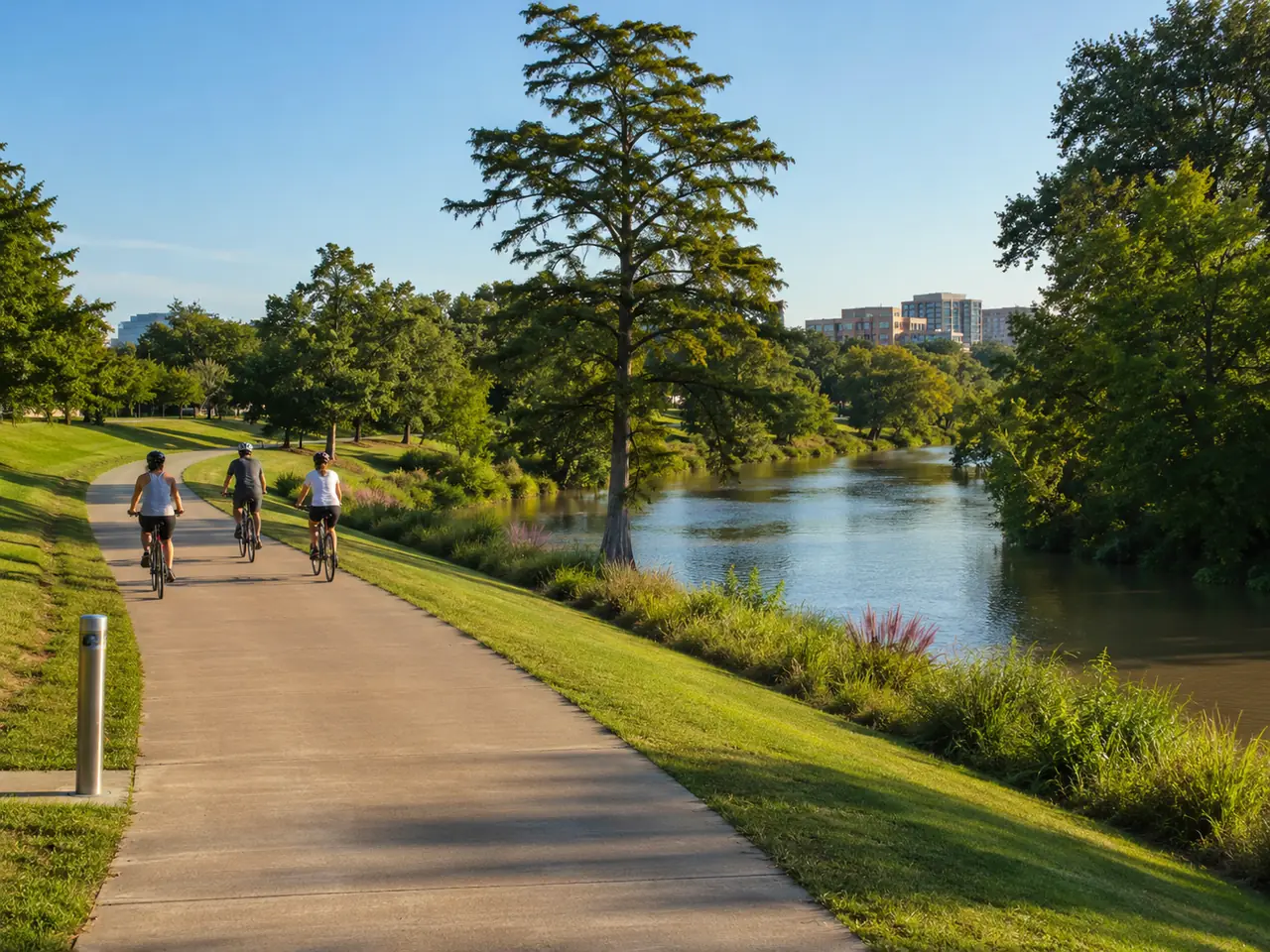
Under your own power, the river is the answer. The Mission Reach is an eight-mile linear park along the San Antonio River — fifteen to sixteen miles of trail counting both banks, which measures a different thing — mostly flat, mostly paved, an out-and-back rather than a loop. It does not reach the mission gates: the missions sit off the continuous path, through signed “Mission Portals” onto public streets, with the Theo Parkway trailhead 0.6 miles from Mission Concepción. For bikes, San Antonio BCycle has docks at every mission and a $25 day pass — check the current figure, because that pricing page carries no effective date. There is no affiliate revenue in it for us, and it is still the cheapest way to reach all four. Riding the trail.
The visitor centre, the film and the free ranger walks
The park’s only visitor centre is at Mission San José. The film, Gente de Razón (“People of Reason”), runs free in English on the hour from 10:00 a.m. to 4:00 p.m. and in Spanish on the half-hour from 10:30 a.m. to 3:30 p.m. One park page calls it 23 minutes and another 20.
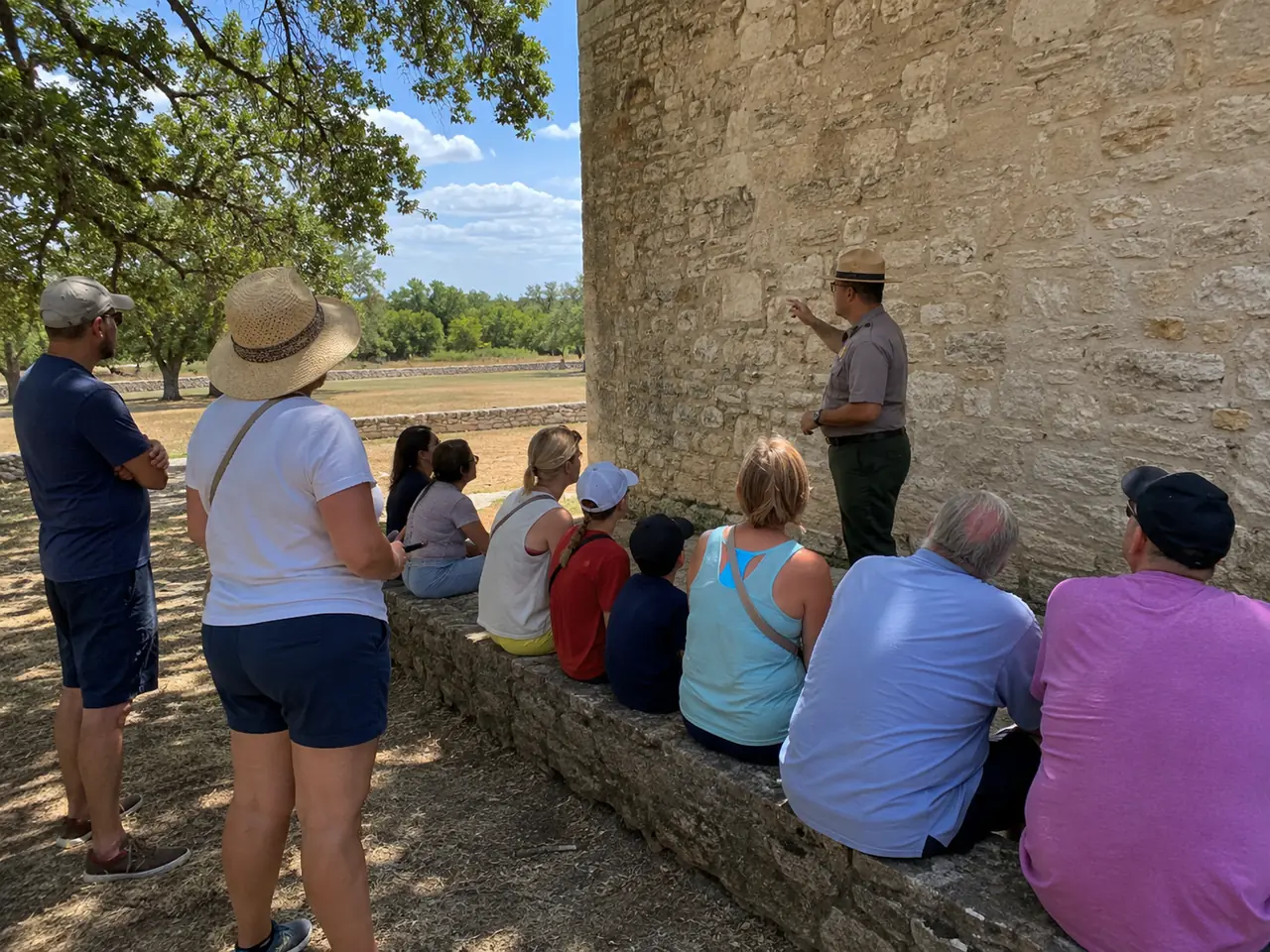
The ranger walks are what people miss, because nothing about them looks like a product. On the July 2026 schedule: Mission San José daily at 10:00 and 11:00 a.m., about 45 minutes, from the visitor centre, entirely paved and wheelchair-accessible; Mission Concepción and Mission San Juan at 10:00 a.m.; Mission Espada at 3:00 p.m., weaving at a loom inside the museum. None on the first Wednesday of any month, each limited to 50 people, first come first served, nothing to book. The park publishes two conflicting timetables, so confirm on the day.
On access, the park’s own word is “partially”: every major site is partially wheelchair accessible, a wheelchair is on loan at each, and elsewhere there may be rough terrain, steep grades or stairs. For Mission Concepción and Mission Espada nothing specific is published at all, and we are not filling that gap with a guess. Accessibility.
The order I would run the day in
The Park Service recommends no order anywhere, so anyone who tells you the park has an official route is inventing it. The city’s own tourism body does publish one, and it cannot be walked: it begins at Mission San José and sends you south to Mission Concepción, which is north of it. What order to visit them in corrects that properly. Ours, as reasoning rather than a rule:
- Mission San José at 10:00 a.m., for the ranger walk, the film and the visitor centre. A second walk runs at 11:00.
- North to Mission Concepción. Nearest to downtown, and the four rooms of surviving paint are what you will remember.
- Then south: Mission San Juan, then Mission Espada. The farm and the acequia at one, the 1756 church at the other — the half of the park that punishes you for having no transport.
- Finish at the 3:00 p.m. loom, if the day has run to time.
How long it takes depends who you ask, and the disagreement is worth publishing rather than averaging: the Park Service suggests three to four hours for all four, Visit San Antonio four to six. Budget half a day, more if you cycle. How long you need.
What a tour is actually buying you
Not entry. Nobody can sell you admission to a park that does not charge for it. A guided tour sells transport and a guide, and here the transport half earns the money, because route 42 serves two missions and the tour goes to four. If you have a car and a morning you do not need one, and we would rather say so than sell around it. Prices run US$65 to US$159 per person.
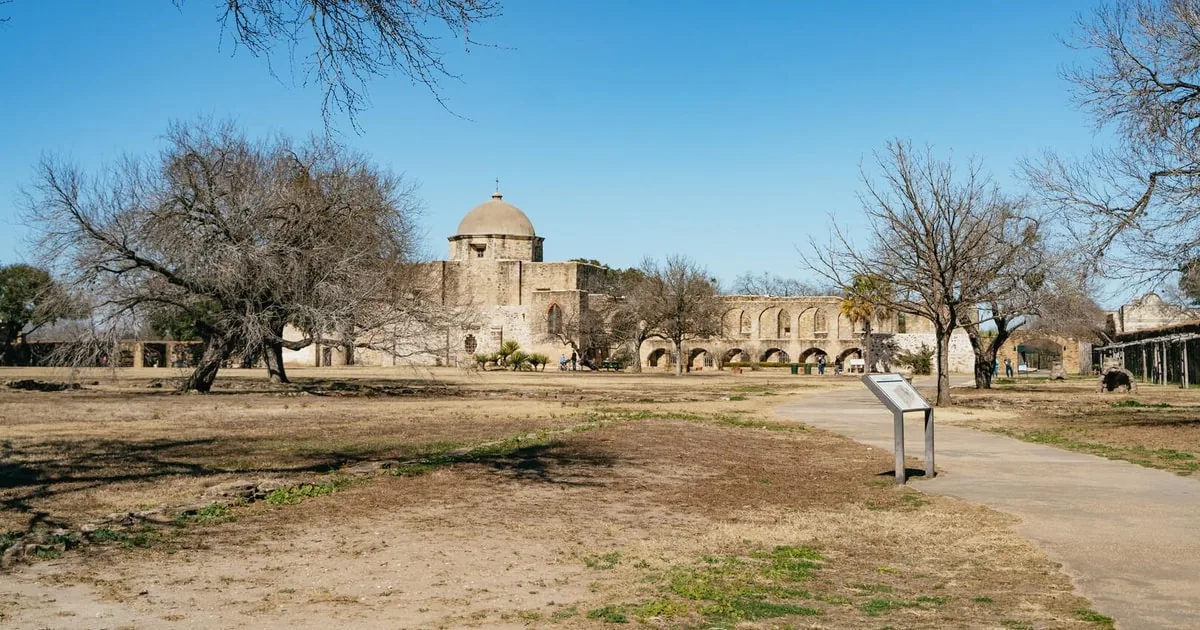 Most reviewed
San Antonio: UNESCO World Heritage Missions Tour
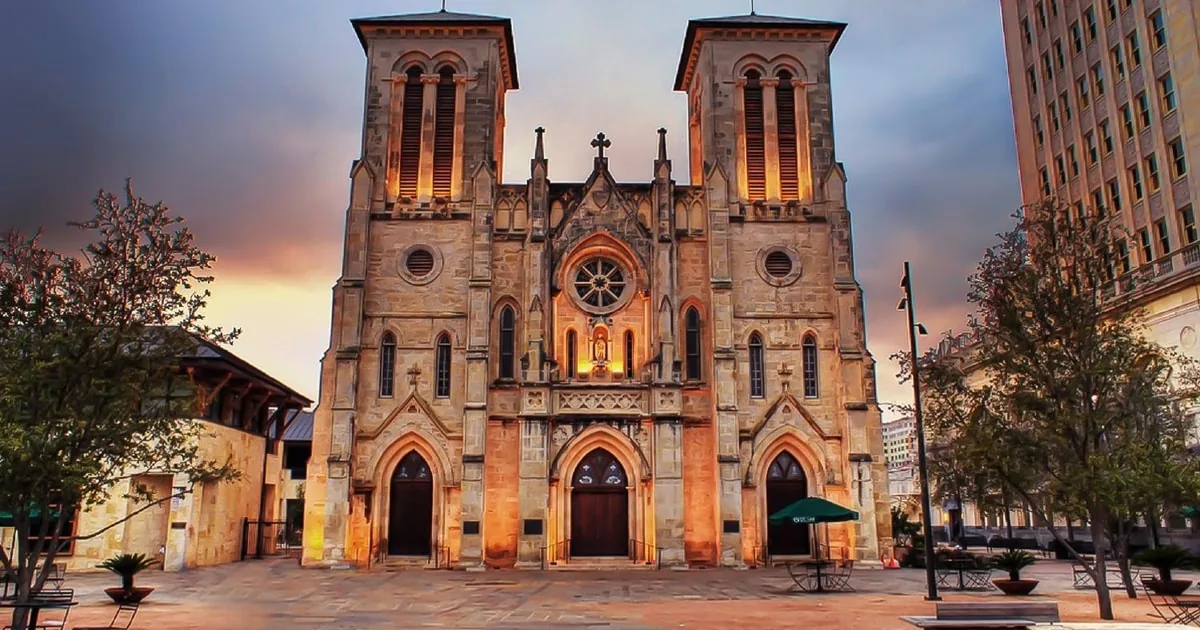 The wider city day
San Antonio: City Sightseeing Van Tour
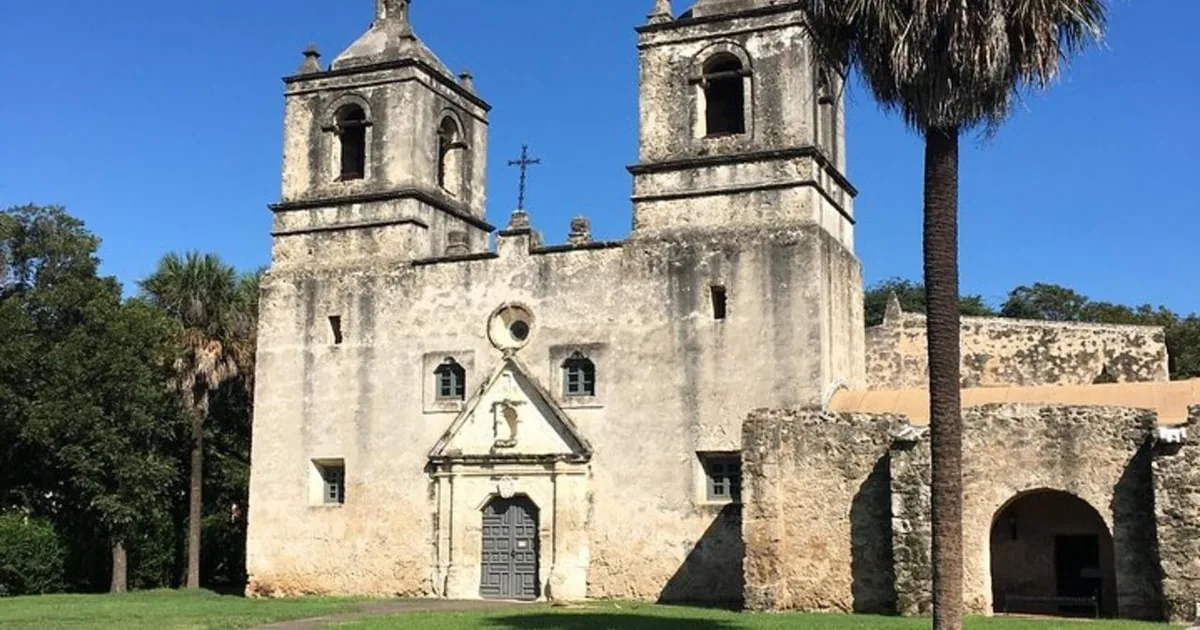 Highly rated
San Antonio: World Heritage Historic Missions Tour
Those three are the comparable ones: 4.5 from 251 ratings, 4.6 from 62, 4.9 from 39. The other two carry samples too thin to compare with those. The 4.9 on the small-group premium tour rests on 8 ratings and the 5.0 on the longest tour rests on 3. Three people agreeing is three people, not a five-star product. All five, with the sample behind each score, and what those reviews are evidence of.
The park is free, so the thing to plan is not the money. Decide before you leave your hotel how you are reaching Mission San Juan and Mission Espada — that is the difference between a two-mission morning and the whole park.
One caveat under every figure above: the pages carrying the most weight here — fees, hours, church information — all still read “last updated 5 May 2025”. Check nps.gov/saan before you travel rather than after.
Frequently asked questions
Do you need tickets to visit the San Antonio missions?
No. The National Park Service states that an entrance pass is not required to access San Antonio Missions National Historical Park, and parking, the ranger-guided walks and the park film are free as well. The only charges are a permit for commercial or professional photography and a $50 application fee for special use permits, neither of which applies to an ordinary visit. The Alamo is a separate site with its own arrangements and needs a reservation.
Can you get to all four missions by bus?
No. The Park Service says public transport through VIA reaches only the two northern missions, Concepción and San José, on route 42. San Juan and Espada realistically need a car, a bike, a rideshare or a guided tour. A regular VIA ride is $1.30, a day pass $2.75, and transfers are free — but check VIA before you travel, because a service change including route 42 takes effect on 24 August 2026.
How long do you need to see the San Antonio missions?
The Park Service suggests allowing three to four hours for all four, with an hour and a half to two hours at Mission San José including the visitor centre and 30 minutes or less at each of the others. Visit San Antonio suggests four to six hours. Budget half a day, and more if you are cycling the Mission Reach rather than driving.
Which San Antonio mission should you visit if you only see one?
Mission San José. The park calls it the Queen of the Missions and the largest of them, its limestone church began in 1768, the Rose Window is described as the premier example of Spanish Colonial ornamentation in the United States, and it holds the park’s only visitor centre, the film and by far the most ranger programming.
Are the mission churches open to visitors?
Sometimes, and nobody will guarantee it. All four churches are active Catholic parishes and the Park Service says church hours vary because of it. The 9 a.m. to 5 p.m. park hours cover the grounds and facilities, not the church interiors, and a wedding or a funeral can close one on any day. Phone the parish if a particular church interior matters to you.
What order should you visit the San Antonio missions in?
The Park Service recommends no order at all. North to south — Concepción, San José, San Juan, Espada — is the natural run from downtown, since Concepción is about three miles south of the city centre. Starting at Mission San José for the 10 a.m. ranger walk and then working the line is the plan this site would run, and that is our reasoning rather than a rule.